
Generosity is often most visible at the moment of emergency. When floods wash away harvests or violence uproots families, people of goodwill respond with food, clothing and immediate relief. That compassion matters, and in moments of acute distress, help cannot wait.
Emergency aid meets urgent needs. Lasting resilience also depends on investment before a crisis arrives. Offered as an invitation to reflect together, this essay explores how nurturing local learning spaces, capable educators and shared community ownership during times of relative calm can help communities withstand disruption and recover.
How Local Learning Spaces Hold Communities Together
A library or reading hub does not build resilience simply by storing books on a shelf. Its value grows through what happens when neighbours gather around knowledge, mentorship and shared responsibility over time. With thoughtful teaching and sustained participation, these spaces can strengthen literacy, practical skills and relationships that people may draw on when hardship arrives.
History offers examples of learning spaces continuing to serve communities through profound disruption.
During the Blitz of 1940 and 1941, bombing destroyed homes and forced many Londoners to seek shelter in Underground stations. In Bethnal Green, the shelter came to include a lending library.1 The borough’s public library had opened in 1922, well before the war.2 The shelter library preserved access to books amid disruption. It offers a reminder that institutions built in ordinary times can remain valuable when circumstances change dramatically.
Postwar Japan offers a different example of investment in community learning. Japan’s education ministry encouraged the creation of kominkan, or citizens’ public halls, from 1946. The Social Education Law followed in 1949. These halls became a basis for social education and participation in democratic society, combining public support with opportunities for local involvement.3 Their history illustrates a commitment to giving community learning a lasting institutional home. It does not establish that the halls alone drove Japan’s recovery.
These examples suggest a practical principle for our work today: alongside meeting immediate needs, we can support the places and relationships that help people keep learning and participating in community life. That is an argument for patient investment, rather than a claim that a library can prevent a crisis.
Why Books Alone Do Not Build Capability
In charitable and development work, it is easy for all of us to treat deep structural vulnerability as a simple supply problem. When children fall behind, ship boxes of books. When households struggle, send another round of relief parcels. Those supplies can meet real needs. Their longer-term value also depends on the people and systems that make them useful.
Education research shows why human support must come alongside physical resources. A randomised evaluation in rural Kenyan primary schools found that supplying textbooks did not raise average test scores, although pupils with higher initial scores benefited. The textbooks were written in English, a third language for most pupils, and many could not use them effectively.4 The World Bank’s World Development Report 2018 similarly stresses the need to align education systems around learning, including support for learners and teachers and attention to governance.5 Pratham’s Teaching at the Right Level approach assesses children’s current learning levels, groups them accordingly and supports instructors through practical guidance and mentorship. Randomised evaluations have found substantial gains in foundational learning when the approach is implemented well.6
That distinction matters for resilience. Being able to read, calculate and assess information can expand a young person’s choices in work, health and community life. Those opportunities also depend on livelihoods, public services, safety and wider economic conditions. Books, capable educators and sustained mentorship belong together in the effort to build human capability.
A library or reading hub does not build resilience simply by storing books on a shelf. Its value grows through what happens when neighbours gather around knowledge, mentorship and shared responsibility over time.
Building Opportunity on Nigeria’s Jos Plateau
On the Jos Plateau, these questions speak directly to COAL’s work in education and the creative arts. National evidence provides important context. The Federal Government and UNICEF’s Situation Analysis of Children and Adolescents in Nigeria, 2024 documents major barriers to education, with out-of-school children disproportionately concentrated in rural areas, northern Nigeria and poorer households.7 The circumstances of individual communities still need to be understood locally.
Local education and creative spaces cannot stop armed violence, and communities must never be blamed for lacking the means to protect themselves. Public security and accountability remain the state’s responsibility. Still, even amid uncertainty, supporting the institutions where young people learn, create and organise can help expand their opportunities beyond the immediate crisis.
The Southern African philosophy of Ubuntu offers a language for this shared commitment, emphasising shared humanity and mutual responsibility.8 In that spirit, we see investment in young people’s growth as a responsibility we hold together.
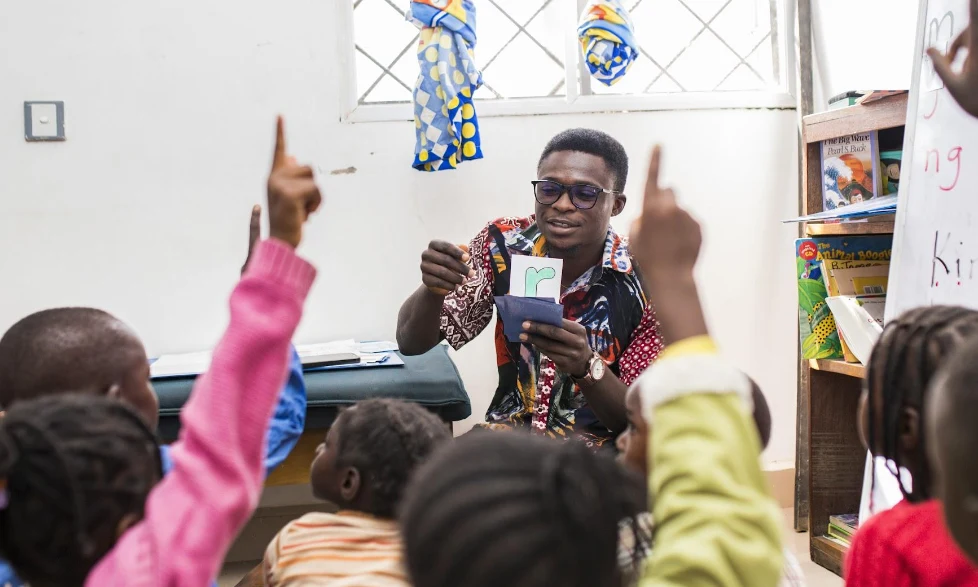
Imagine a young person in Jos walking into a neighbourhood hub close to home, where she can read African stories, collaborate with peers, meet mentors and develop creative skills. Alongside her are local educators receiving dependable support to help children master reading and arithmetic. Our ambition is for such spaces to help young people gain practical skills, form trusted relationships and take an active part in shaping their neighbourhood’s future.
An Open Invitation to Build What Lasts Together
Building that foundation need not always begin with a new building. Existing churches, mosques, schools and community halls may offer opportunities for shared reading hubs and creative centres where local leaders and residents agree suitable access, safeguarding and stewardship. With dependable support, familiar spaces can serve more people in new ways.
That collaborative spirit shapes COAL’s approach to grassroots education, literature and the creative arts. Rather than claiming a single blueprint, we offer these reflections as an invitation to work together across different perspectives:
- With community members and local institutions: We welcome partnerships that contribute suitable spaces, time and stewardship so that reading circles and youth creative hubs become more accessible, with the people they serve having a real voice in their care and direction.
- With donors and philanthropic partners: We invite a conversation about complementing emergency relief with steady support for the local educators, books, mentorship and systems that keep grassroots institutions running year after year.
- With fellow practitioners and educators: We hope to learn alongside peers building education and creative pathways grounded in local needs, combining useful resources with sustained teaching and support.
Emergency relief will always have an honourable place when disaster strikes. At the same time, we can choose to build together before the next appeal arrives, steadily, one shared neighbourhood space, one supported educator and one young creator at a time. Continuing public and charitable support can be part of that foundation. Communities deserve that quiet commitment today, long before tomorrow’s crisis arrives.
References
-
Tower Hamlets Local History Library and Archives. Local History Library and Archives Newsletter, July 2015. Includes the Bethnal Green Tube Shelter Library photograph and account. ↩
-
Historic England. Bethnal Green Library. National Heritage List for England, entry 1391330. Records the library’s opening in October 1922. ↩
-
Ministry of Education, Culture, Sports, Science and Technology, Japan. The Promotion of Social Education, in Japan’s Modern Educational System. ↩
-
Glewwe, P., Kremer, M. and Moulin, S. (2009). Many Children Left Behind? Textbooks and Test Scores in Kenya. American Economic Journal: Applied Economics, 1(1), pages 112 to 135. DOI: 10.1257/app.1.1.112. ↩
-
World Bank (2018). World Development Report 2018: Learning to Realize Education’s Promise. Washington, DC: World Bank. ↩
-
Abdul Latif Jameel Poverty Action Lab. Teaching at the Right Level to Improve Learning. Case study, updated August 2022. ↩
-
Federal Ministry of Budget and Economic Planning and UNICEF Nigeria (2024). Situation Analysis of Children and Adolescents in Nigeria, 2024. Abuja: Federal Government of Nigeria and UNICEF Nigeria. Chapter 4, particularly section 4.7 on children out of school. ↩
-
Parliament of South Africa. Parliament Calls on South Africans to Build a Heritage Rooted in Ubuntu. ↩
Editorial note: The core ideas and grassroots perspectives in this essay draw on COAL’s community engagement on the Jos Plateau. AI tools assisted with structural editing and checking sources; the argument and recommendations are presented as COAL’s institutional commentary.